In This Article
If you're an audiophile or a musician, you understand that pristine sound isn't just a preference; it's a way of life. Every nuance, every subtle frequency shift, matters. So, when something feels a little off with your hearing, even subtly, it can be genuinely unsettling. You might find yourself wondering, "Is it my equipment, or is it… me?" Honestly, it's a question many of my patients who share your passion for sound ask. And often, the answer lies in something surprisingly common: earwax. So, should audiophiles get routine microsuction? Let's talk about it.
Understanding Earwax and High-Fidelity Hearing
The Delicate Balance: Earwax and High-Frequency Sound Perception
Your ear canal isn't just a passive tube; it's a finely tuned acoustic instrument. It naturally resonates, amplifying certain frequencies to help you hear the world around you. This natural amplification is particularly effective for sounds in the 3,000 to 4,000 Hz range [1]. Now, imagine a tiny, soft obstruction in that perfectly calibrated space. Even a small amount of earwax can act like a damper, subtly altering the acoustics of your ear canal. This interference is most noticeable with high-frequency sounds, typically those above 4 kHz [2]. Think about it this way: those crisp cymbals, the shimmering harmonics of a violin, the delicate breath in a vocal track – these are the frequencies that give music its sparkle and detail. When earwax is present, these sounds can become muffled, distorted, or simply less vibrant. For someone whose livelihood or passion depends on discerning these subtleties, even partial occlusion can be profoundly frustrating.
Why are audiophiles and musicians uniquely sensitive to this? It's simple: your ears are trained. You've spent countless hours honing your auditory perception, developing an acute awareness of sound quality that the average person might not possess. A slight dip in high-frequency response that goes unnoticed by others can be glaringly obvious to you. It's not just about volume; it's about clarity, separation, and the overall soundstage. When earwax interferes, it compromises the very integrity of the audio experience you cherish. You can learn more about the role of earwax in general ear health by visiting our page on /ear-health/what-is-earwax.
The Culprits: In-Ear Monitors and Custom Ear Moulds
Here's what I mean: while in-ear monitors (IEMs) and custom ear moulds are fantastic tools for sound isolation and delivering exceptional audio directly to your ears, they can, inadvertently, become contributors to earwax buildup. These devices sit snugly within your ear canal, and in doing so, they can interfere with your ear's natural self-cleaning mechanism. Normally, earwax migrates slowly outwards, carrying away dead skin cells and debris. However, IEMs and ear moulds can push this wax deeper into the canal, compacting it and obstructing its natural exit [3]. This isn't a fault of the devices themselves, but rather a consequence of their design and how they interact with your ear's anatomy. Over time, this can lead to a significant accumulation of cerumen, which then starts to impact your hearing quality. If you use hearing aids, which often share similar design principles with custom ear moulds, you might find our article on /blog/hearing-aids-and-earwax particularly relevant. It's also worth noting that attempts to clean your ears with cotton buds, especially when using these devices, can worsen the problem by pushing wax further in, a common mistake we discuss in /blog/earwax-removal-mistakes-to-avoid.
Outer Section: Proactive Care and Microsuction for Audiophiles
When to Consider Professional Cleaning: A Proactive Approach
Given your dedication to sound quality, you might be wondering how often you should consider professional earwax removal. For most people, a visit every six to twelve months is a good general guideline to keep things clear and prevent issues [4]. However, if you're an audiophile or musician regularly using IEMs or custom ear moulds, you might find that a more frequent schedule suits you better. Your ears are unique, and so is your wax production. It's about finding what works for you, often in consultation with a clinician who understands your specific needs. What are the signs that it might be time for a check-up? Look out for subtle changes in sound clarity, a feeling of muffled audio, or any discomfort when inserting your devices. Sometimes, it's not a sudden blockage but a gradual degradation of sound quality that signals a buildup. Don't wait until you're completely blocked; proactive care is always best.
Why Microsuction is the Audiophile's Choice
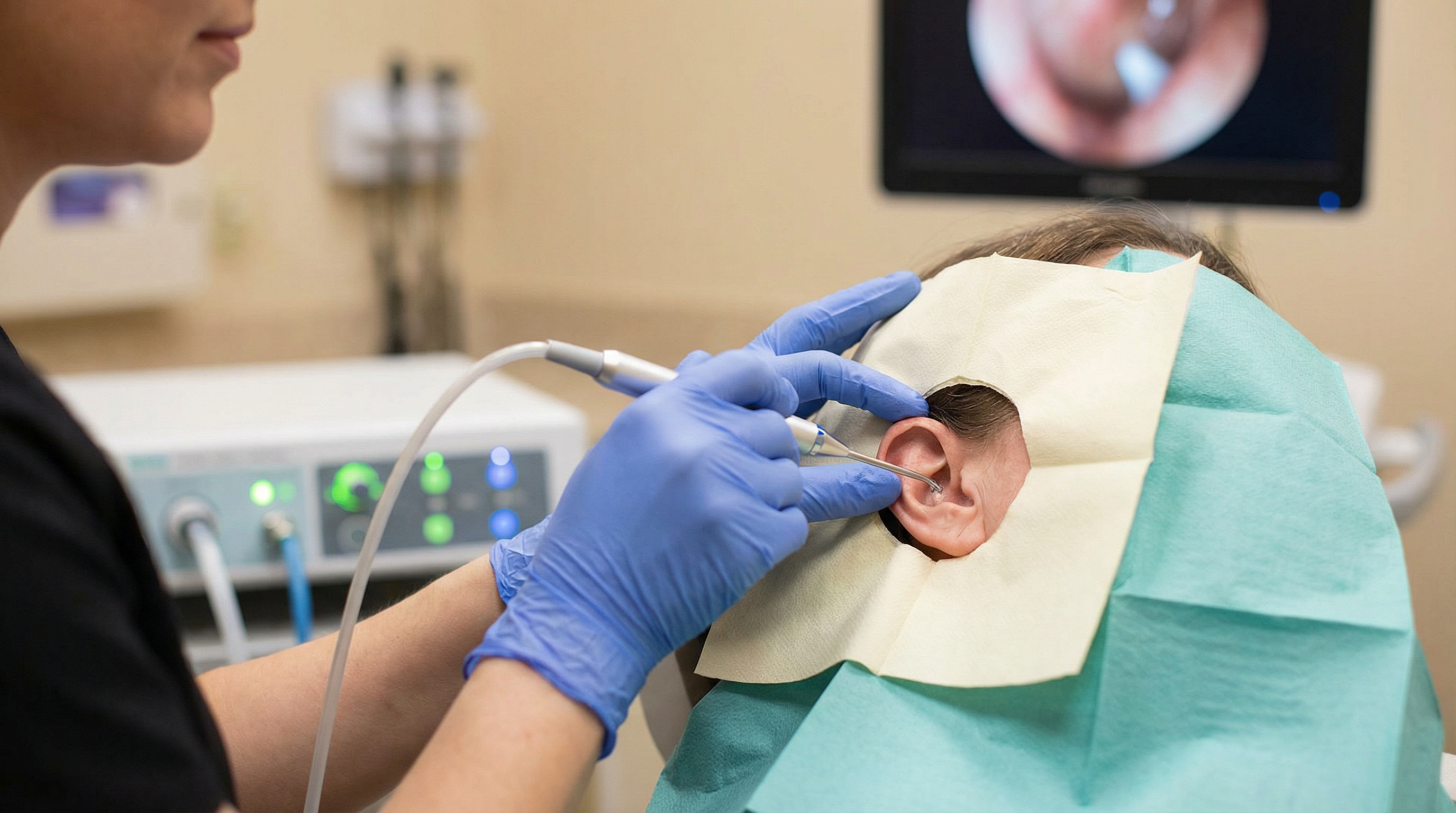
When it comes to earwax removal, there are a few methods available, but for someone who values precision and the delicate ecosystem of their ears, microsuction truly stands out. Here's why it's often the preferred choice for audiophiles and musicians:
| Feature | Microsuction | Ear Syringing / Irrigation |
|---|---|---|
| Method | Uses a fine suction probe and a microscope or endoscope for direct visualisation. | Involves flushing the ear canal with water, often without direct visualisation. |
| Precision | Highly precise; allows the clinician to see exactly what they're doing, targeting only the wax. | Less precise; relies on water pressure to dislodge wax, which can push it deeper or miss smaller fragments. |
| Safety | Generally considered very safe; minimal risk of damage to the eardrum or ear canal lining. | Higher risk of complications like eardrum perforation, infection, or vertigo due to water pressure and lack of visibility [5]. |
| Comfort | Often well-tolerated; can be a little noisy but typically not painful. No water ingress. | Can be uncomfortable, messy, and may cause dizziness or nausea due to temperature differences of the water. |
| Suitability | Ideal for delicate ears, those with perforated eardrums, or a history of ear infections. Perfect for IEM/ear mould users. | Not suitable for those with perforated eardrums, ear infections, or certain medical conditions. |
| Effectiveness | Highly effective for all types of wax, including hard or impacted cerumen. | May struggle with very hard or impacted wax; can sometimes worsen impaction. |
As you can see, microsuction offers a level of control and safety that other methods simply can't match. The direct visualisation means we're not working blind; we're meticulously removing the wax, piece by piece, ensuring your ear canal is clear without any unnecessary trauma. This gentle approach is particularly important for those who rely on their ears for their profession or passion. You'll find more detailed information about this procedure on our /services/microsuction page, and a comparison with other methods on /blog/microsuction-vs-ear-syringing.
Maintaining Your Auditory Edge
Getting your ears professionally cleaned is a fantastic step, but maintaining that clarity is an ongoing process. Here are a few practical tips to help minimise future earwax buildup and protect your hearing:
- Clean Your Devices Regularly: Make sure your IEMs and custom ear moulds are cleaned thoroughly after each use. This prevents wax and debris from being pushed back into your ear canal. Check the manufacturer's guidelines for specific cleaning instructions.
- Avoid Cotton Buds: Honestly, this is one of the biggest culprits for earwax problems. Cotton buds tend to push wax deeper into the ear, compacting it against the eardrum and making it much harder for your ear to self-clean. They can also irritate the delicate skin of the ear canal, leading to more wax production or even infection. We've written a whole article on the /ear-health/cotton-buds-dangers and the /blog/earwax-removal-risks-and-how-to-avoid.
- Consider Ear Drops (if advised): For some, a few drops of olive oil or a cerumenolytic solution (like those discussed in /blog/best-earwax-removal-drops-that-work or /blog/hydrogen-peroxide-for-earwax) used occasionally can help soften wax and aid its natural migration. Always consult with a professional before using any ear drops, especially if you have any ear conditions.
Call to Action
Ready to Hear Clearly Again?
If you're an audiophile or musician and you suspect earwax is compromising your sound experience, don't let it linger. We understand how important your hearing is to you. At Earwax Removal Devon, we offer professional, safe, and effective microsuction services designed to restore your auditory clarity. We pride ourselves on our patient-centred approach, ensuring you feel comfortable and well-informed throughout the process. We often have same-day appointments available, and we can even arrange home visits for your convenience. Our clinic in South Molton is ready to welcome you. Give us a call on 01769 302119 to book your appointment and get back to enjoying music the way it was meant to be heard.
References
- The most important part of any sound system: your ears - Headmania
- Beyond the Sound Waves: A Comprehensive Exploration of Burn-In Phenomenon in Audio Systems - PMC
- Are My In-Ear Headphones Causing Earwax Buildup? - Debrox
- How Often Should You Have Ear Wax Removed? - The Forbury Clinic
- Clinical practice guideline (update): earwax (cerumen impaction) - American Academy of Otolaryngology—Head and Neck Surgery Foundation