
In This Article
I'll be honest with you. As someone who removes earwax professionally, my first instinct is to tell you not to syringe your ears at home. And I do think professional removal is safer, more effective, and gives you a better outcome. Microsuction, in particular, is performed under direct vision, which means the practitioner can see exactly what they're doing—something you simply can't replicate at home.
But I also live in the real world. I know that millions of people across England have lost access to free NHS ear wax removal. I know that not everyone can afford to go private. And I know that when your ears are blocked and you're struggling to hear, the temptation to try and sort it out yourself is overwhelming.
So rather than pretend people aren't going to try this, I'd rather give you honest, practical guidance on how to do it as safely as possible—and be very clear about when you need to stop and get professional help.
Before You Do Anything: Is It Actually Earwax?
This is the first and most important question. Not every blocked ear is caused by wax. Eustachian tube dysfunction can produce identical symptoms—muffled hearing, fullness, pressure, even pain—but it has nothing to do with wax in your ear canal. Ear infections, both outer ear (otitis externa) and middle ear (otitis media), can cause blockage and hearing loss. So can sudden sensorineural hearing loss, which is a medical emergency.
Stop and see a doctor immediately if you experience: sudden hearing loss that came on within hours, discharge or bleeding from your ear, severe pain, fever alongside ear symptoms, hearing loss after a head injury, or symptoms in only one ear with no history of wax problems.
If your symptoms have developed gradually, you've had wax problems before, and you're otherwise well, then earwax is the most likely culprit. But even then, you can't be certain without someone looking in your ear. That's the fundamental limitation of home treatment—you're working blind.
The Golden Rule: Soften First, Always
Whatever method you use to try and clear your ears at home, the single most important step is softening the wax first. This isn't optional. It's the difference between a reasonable chance of success and almost certain failure.
The NHS recommends the following approach: lie on your side with the affected ear facing up, put two to three drops of olive or almond oil in your ear (don't use almond oil if you're allergic to almonds), continue to lie on your side for five to ten minutes after putting in the oil, and repeat this three to four times a day for three to five days.
NICE guidelines recommend several options for softening drops: sodium bicarbonate 5% ear drops, olive oil drops, almond oil drops, or plain water and saline. All of these are available from your pharmacist without a prescription.
Here's what the softening process actually does. Earwax is a mixture of dead skin cells, hair, and secretions from the ceruminous glands in your ear canal. When it builds up and hardens, it forms a plug that's firmly attached to the canal walls. Trying to remove hard, dry wax is difficult and painful. Oil or drops penetrate the wax, break down its structure, and make it softer and more pliable. Softer wax is easier to remove and less likely to cause damage during the process.
Give the drops at least three to five days to work. I know that's frustrating when you can't hear properly, but rushing this step is a mistake. Some people find that the drops alone are enough—over about two weeks, the softened wax migrates out of the ear canal naturally.
Your jaw plays a role in this process, helping to move wax outwards through chewing and talking movements.
The RNID notes that there's "little evidence" drops or sprays alone will resolve the issue in more than one out of every five people. So for many, drops are a necessary first step but not a complete solution.

Home Irrigation: The Bulb Syringe Method
If softening drops haven't cleared the blockage after a week or two, some people move on to home irrigation using a bulb syringe. This is the closest thing to "syringing your ears at home," and it's the method that carries the most risk.
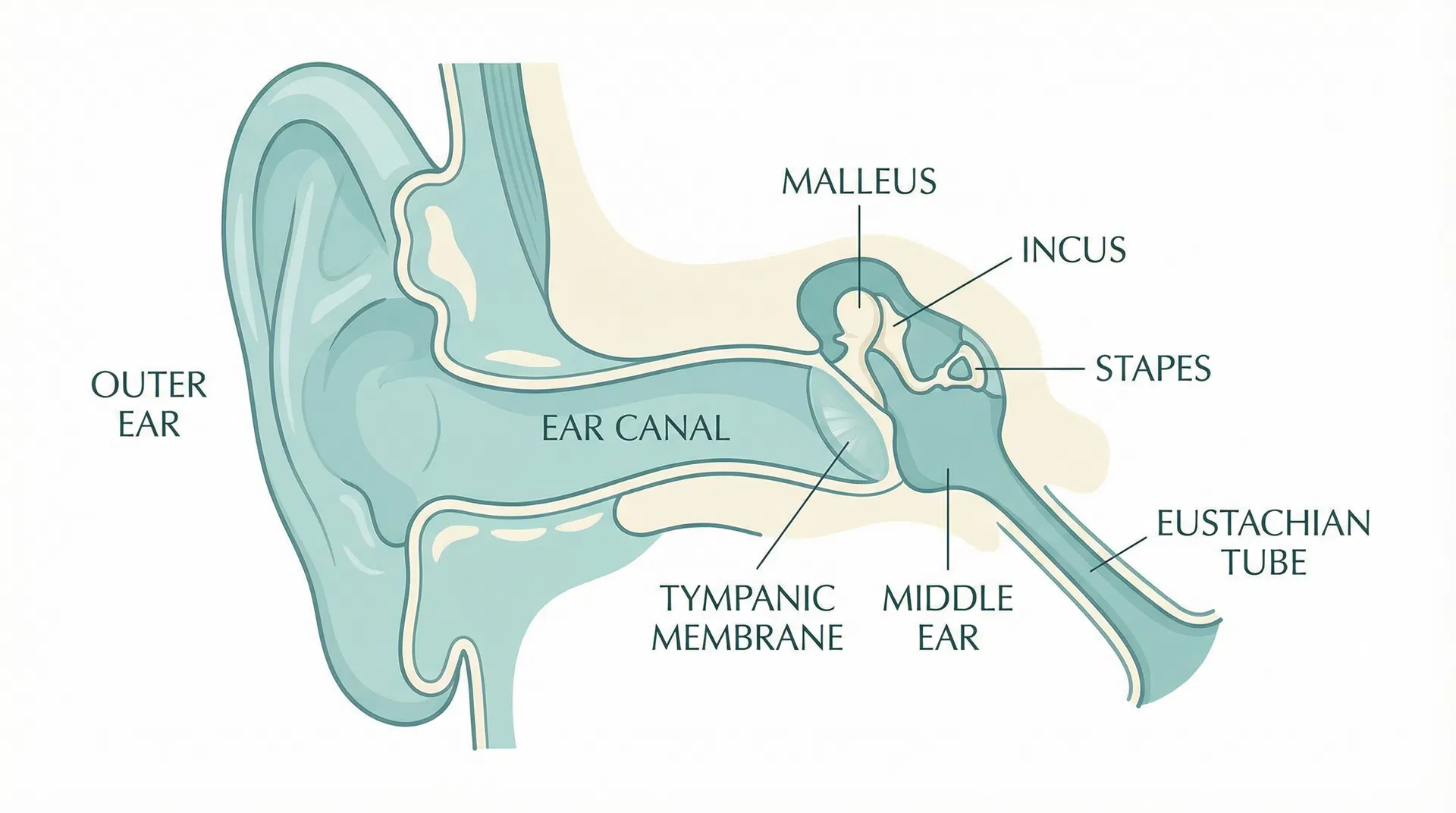
Let me be clear about what you're doing here. You're squirting water into your ear canal to try and flush out softened wax. You can't see what's happening inside your ear. You can't see where the wax is, how much there is, or whether the water is going where you want it to go. Professional ear irrigation uses electronic equipment with controlled pressure and temperature, performed by someone who can visualise your ear canal. Home irrigation with a bulb syringe has none of these safeguards.
That said, if you're going to do it, here's how to minimise the risks.
Step-by-Step Guide
Prepare the water. Use clean, lukewarm water—body temperature is ideal, around 37°C. Water that's too cold or too hot can cause dizziness, nausea, and vertigo by stimulating your vestibular system. This isn't a minor side effect. Caloric vertigo from incorrect water temperature can be severe enough to make you vomit. Test the water on the inside of your wrist, just like you would for a baby's bottle.
Use the right equipment. A rubber bulb syringe designed for ear irrigation is what you need. These are available from pharmacies. Don't use a standard syringe, a water pick, a shower head, or any other device that creates uncontrolled water pressure. The pressure matters enormously—too much force can perforate your eardrum.
Position yourself properly. Sit upright or tilt your head slightly so the affected ear is facing down over a basin or bowl. You want the water to flow in and then drain back out, carrying the wax with it. Have a towel ready—this gets messy.
Gently pull your ear. For adults, gently pull your outer ear upwards and backwards. This straightens your ear canal slightly and gives the water a clearer path.
Squeeze gently. Point the tip of the bulb syringe towards the roof of your ear canal—not directly at your eardrum. Squeeze the bulb gently to release a small amount of water. Don't force it. The water should flow in smoothly, not blast in under pressure. Let the water drain out into the basin.
Repeat carefully. You can repeat this several times, but stop if you experience any pain, dizziness, or discomfort. If the wax doesn't come out after three or four gentle attempts, stop. Continuing to irrigate a stubborn blockage increases the risk of complications.
Dry your ear afterwards. Tilt your head to let any remaining water drain out. You can gently pat the outer ear with a clean towel. Don't insert anything into your ear canal to dry it—not cotton buds, not tissue, not your finger.
What You Might See
If the irrigation works, you'll see chunks or pieces of wax in the water that drains out. They might be dark brown, orange, or yellowish. Your hearing should improve noticeably—sometimes dramatically—once the blockage clears. That moment when sound rushes back in is genuinely remarkable.
If you don't see any wax coming out after several attempts, the blockage may be too hard, too deep, or too firmly attached for home irrigation to shift. This is your cue to stop and seek professional help.
What You Should Never Do
The NHS is unambiguous on this point: do not use your fingers or any objects like cotton buds to remove earwax. This pushes wax deeper into the canal and makes things worse.
Cotton buds are one of the most common causes of ear problems we see professionally. They compact wax against the eardrum, scratch the delicate skin of the ear canal, and can cause infections and perforations. The cotton tip can even detach and get stuck in your ear canal, requiring emergency removal.
Ear candles don't work. The NHS states there's no evidence they remove earwax. They can burn your face, hair, and ear. Hot wax can drip into your ear canal. They're dangerous and ineffective—a bad combination.
Ear vacuum devices marketed for home use are similarly unsupported by evidence. Harvard Health advises against using home earwax removal tools, noting that it's unnecessary to clean inside the ears unless someone has a blockage, and that most of these devices are "a blind way of cleaning" that cause more harm than good.
Hydrogen peroxide in high concentrations can irritate and damage the skin of your ear canal. If you want to use peroxide-based drops, stick to products specifically formulated for ear use and follow the instructions carefully.
Bobby pins, paperclips, keys, pen caps—I've seen all of these pulled from ear canals. None of them belong anywhere near your ears. Ever.
Who Should Not Attempt Home Ear Syringing
Some people should avoid home irrigation entirely and go straight to a professional. This isn't about being overly cautious—it's about genuine clinical risk.
-
If you have or suspect a perforated eardrum, do not put water or drops in your ear. Water entering the middle ear through a perforation can cause serious infection.
-
If you have grommets (ear tubes), the same applies. These are small tubes inserted through the eardrum to ventilate the middle ear, and water must not enter through them.
-
If you've had ear surgery, speak to your ENT specialist before attempting any form of ear cleaning.
-
If you have diabetes or are immunocompromised, you're at higher risk of ear infections. What might be a minor irritation for someone else could become a significant infection for you.
-
If you're on blood-thinning medications (anticoagulants), any minor trauma to the ear canal could cause disproportionate bleeding.
-
If you have recurrent ear infections or otitis externa, your ear canal is already inflamed and vulnerable. Adding water to an already irritated canal is asking for trouble.
-
If you have tinnitus that's severe or worsening, home irrigation could potentially make it worse. Professional assessment is the safer route.
For all of these situations, microsuction performed by a trained practitioner is the appropriate method. It's a dry procedure—no water enters your ear canal—and it's performed under direct vision, so the practitioner can see and avoid any vulnerable areas.
The Red Flags: When to Stop Immediately
If any of the following happen during home irrigation, stop immediately: pain beyond mild discomfort, any bleeding from your ear canal, sudden worsening of hearing, severe dizziness or vertigo, or unusual discharge. These signs mean something is wrong and you need professional assessment.

Why Professional Removal Is Worth Considering
I know I said I'd give you honest guidance about home syringing, and I have. But I'd be doing you a disservice if I didn't also explain why professional removal is genuinely better.
Microsuction vs ear syringing isn't really a fair comparison. Microsuction uses a gentle vacuum under direct vision—the practitioner can see your entire ear canal and eardrum throughout the procedure. There's no water, no mess, no risk of caloric vertigo from incorrect water temperature, and no risk of pushing wax deeper. It takes about ten to fifteen minutes, and you leave with clear ears.
Professional ear irrigation uses electronic equipment with precisely controlled water pressure and temperature. It's performed by someone trained to recognise complications and respond immediately. The difference between this and squeezing a rubber bulb into your own ear is substantial.
The RNID has documented the consequences of people attempting self-removal without proper guidance. Their research found that the withdrawal of NHS services has pushed millions towards risky self-management, with many experiencing infections, worsened hearing loss, and ear canal damage as a result.
If the cost of private treatment is a concern—and I completely understand that it is—check our pricing page. We've kept our fees as accessible as possible because we believe everyone deserves to hear clearly. We also offer home visits across Devon for patients who can't easily travel to the clinic, and emergency appointments for urgent cases.
The Sensible Approach
Here's what I'd recommend as a practical, step-by-step approach:
Start with olive oil drops for five days, following the NHS guidance. Give your ears a chance to clear naturally. If that doesn't work, speak to your pharmacist about sodium bicarbonate drops and continue for another week.
If after two weeks of drops your ears are still blocked, you have a choice. You can try gentle home irrigation with a bulb syringe, following the steps I've outlined above, accepting that it carries risks and may not work. Or you can book a professional appointment and have it done safely, effectively, and quickly.
If you try home irrigation and it doesn't work after a few gentle attempts, please stop. Don't keep going. Don't try harder. Don't use more pressure. The wax is telling you it needs professional attention.
And if you're in any of the higher-risk categories I mentioned—perforated eardrum, grommets, diabetes, blood thinners, recurrent infections—skip the home approach entirely and come straight to us.
We see patients from across Devon—Barnstaple, Exeter, Plymouth, South Molton, and everywhere in between. If you've been struggling with blocked ears and home remedies aren't cutting it, give us a call on 01769 302119 or book online. We'll get you hearing clearly again—safely, comfortably, and properly.