In This Article
It's a bit of a mystery, isn't it? One minute your ears are fine, the next you're feeling a bit blocked up, or maybe even experiencing some discomfort. You might be wondering if it's just a bit of earwax, or if it's something more serious that needs a doctor's attention. Honestly, it can be tricky to tell the difference, and that's why we're here to help you understand when it's time to seek professional advice for your ear health.
Here at Earwax Removal Devon, we know how unsettling ear problems can be. Eleni, our qualified ear care specialist in South Molton, has seen it all, and she's passionate about making sure you get the right care at the right time. So, let's talk about earwax – what's normal, what's not, and when you really need to get it checked out.
Understanding Earwax: Normal vs. Impaction
First off, let's clear something up: earwax, or cerumen as we call it clinically, isn't bad. In fact, it's actually quite helpful! It's your ear's natural self-cleaning mechanism, protecting your ear canal from dust, foreign particles, and even bacteria. It usually makes its way out of your ear naturally, often helped along by jaw movements like talking and chewing.
But sometimes, this natural process goes a bit awry. Instead of moving out, the wax can build up and become impacted. This is when it starts causing problems. Think about it this way: a little bit of traffic on the road is normal, but a huge pile-up? That's impaction, and it's going to cause some serious delays and frustration.
Red Flag Symptoms: When to Seek Urgent Medical Attention
While a blocked ear can be annoying, some symptoms are red flags – signals that you need to see a doctor urgently. These aren't just about discomfort; they could indicate a more serious underlying condition that requires immediate medical attention. If you experience any of the following, please don't delay in seeking help:
- Sudden Hearing Loss: If your hearing suddenly drops, especially in one ear, and it's not clearly linked to something like a recent loud noise, get it checked out straight away. This could be a sign of something called sudden sensorineural hearing loss, which needs prompt treatment [1].
- Severe Pain: Earache can be mild, but if you're experiencing severe, intense pain that doesn't ease, it's a cause for concern. This could indicate an infection or other issue that needs urgent assessment.
- Discharge from the Ear: Any fluid, pus, or blood draining from your ear is not normal and needs immediate medical review. This can be a sign of infection, a perforated eardrum, or other serious conditions.
- Dizziness or Vertigo: Feeling dizzy, off-balance, or like the room is spinning (vertigo) alongside ear symptoms can be a sign of an inner ear problem. If these symptoms are sudden or severe, seek urgent medical advice.
These symptoms are important, and we can't stress enough that they warrant a quick trip to your GP or even A&E, depending on the severity and how quickly they came on. It's always better to be safe than sorry when it comes to your hearing and ear health.
Why GPs Rarely Remove Earwax Now: The NHS Withdrawal of Service
Now, you might be thinking, "Can't I just go to my GP for this?" And honestly, that's a really common question. For years, ear syringing was a routine service offered by most GP practices. But things have changed quite a bit. The NHS has increasingly restricted earwax removal services, and many GP surgeries no longer offer it.
Here's what I mean: the traditional method of ear syringing, while effective for some, carried risks like ear drum perforation or infection. With advancements in techniques like microsuction and ear irrigation, and a greater understanding of best practices, the focus has shifted. NICE guidelines, specifically NICE guideline NG98: Hearing loss in adults: assessment and management [2], recommend that earwax removal should be offered in primary care or community ear care services if it's causing problems. However, the practical implementation of this has led to a significant reduction in GP-led services.
Think about it this way: the NHS is under immense pressure, and earwax removal, while important, was reclassified from an 'essential service' to one that often falls outside the scope of routine GP care. This means that while the guidelines suggest it should be available, the reality on the ground is that many practices simply don't have the resources, equipment, or trained staff to provide it safely and effectively. This has left a bit of a gap, meaning many people now find themselves needing to seek private care for earwax removal.
When to See a Private Specialist, GP, or A&E
So, with these changes, how do you know where to go? It can be confusing, but let's break it down:
When to See Your GP (General Practitioner)
Your GP is always your first port of call for general health concerns, and that includes ear problems. You should see your GP if:
- You experience any of the red flag symptoms we discussed earlier (sudden hearing loss, severe pain, discharge, dizziness).
- You have persistent ear discomfort, hearing loss, or a feeling of fullness that you suspect is due to earwax, but you're unsure.
- You have underlying health conditions that might make earwax removal more complex, such as a perforated eardrum, a history of ear surgery, or a weakened immune system. Your GP can assess your overall health and advise on the safest course of action.
While your GP might not perform the earwax removal themselves, they can assess your situation, rule out more serious conditions, and advise you on the best next steps, which might include referral to a specialist.
When to See a Private Specialist (Like Earwax Removal Devon)
This is where private clinics like ours come in. You should consider seeing a private specialist if:
- You have symptoms of earwax impaction (hearing loss, blocked sensation, tinnitus, itchiness, earache) that are affecting your quality of life, and your GP no longer offers earwax removal or has advised you to seek private care.
- You want a prompt appointment and a choice of advanced, safe, and effective removal methods like microsuction or ear irrigation.
- You have specific needs or concerns that you want addressed by a dedicated ear care professional.
Private specialists are often equipped with the latest technology and have extensive training in earwax removal, offering a convenient and efficient solution when NHS services are limited.
When to Go to A&E (Accident & Emergency)
A&E is for emergencies only. You should go to A&E if you experience:
- Sudden, severe hearing loss accompanied by extreme pain, discharge, or signs of infection (fever, swelling).
- Sudden onset of severe dizziness or vertigo that makes it impossible to stand or walk.
- Trauma to the ear, such as a foreign object lodged deeply or a suspected eardrum perforation from an injury.
These situations require immediate medical attention to prevent further damage or complications.
What Happens at a Professional Earwax Removal Appointment
So, you've decided to book an appointment with a specialist. What can you expect? Honestly, it's a straightforward and usually comfortable process designed to safely and effectively remove excess earwax.
When you visit Eleni at Earwax Removal Devon, here's a general overview of what will happen:
- Consultation and History Taking: Eleni will start by discussing your symptoms, your medical history, and any previous ear problems you've had. This helps her understand your individual needs and ensure the safest approach.
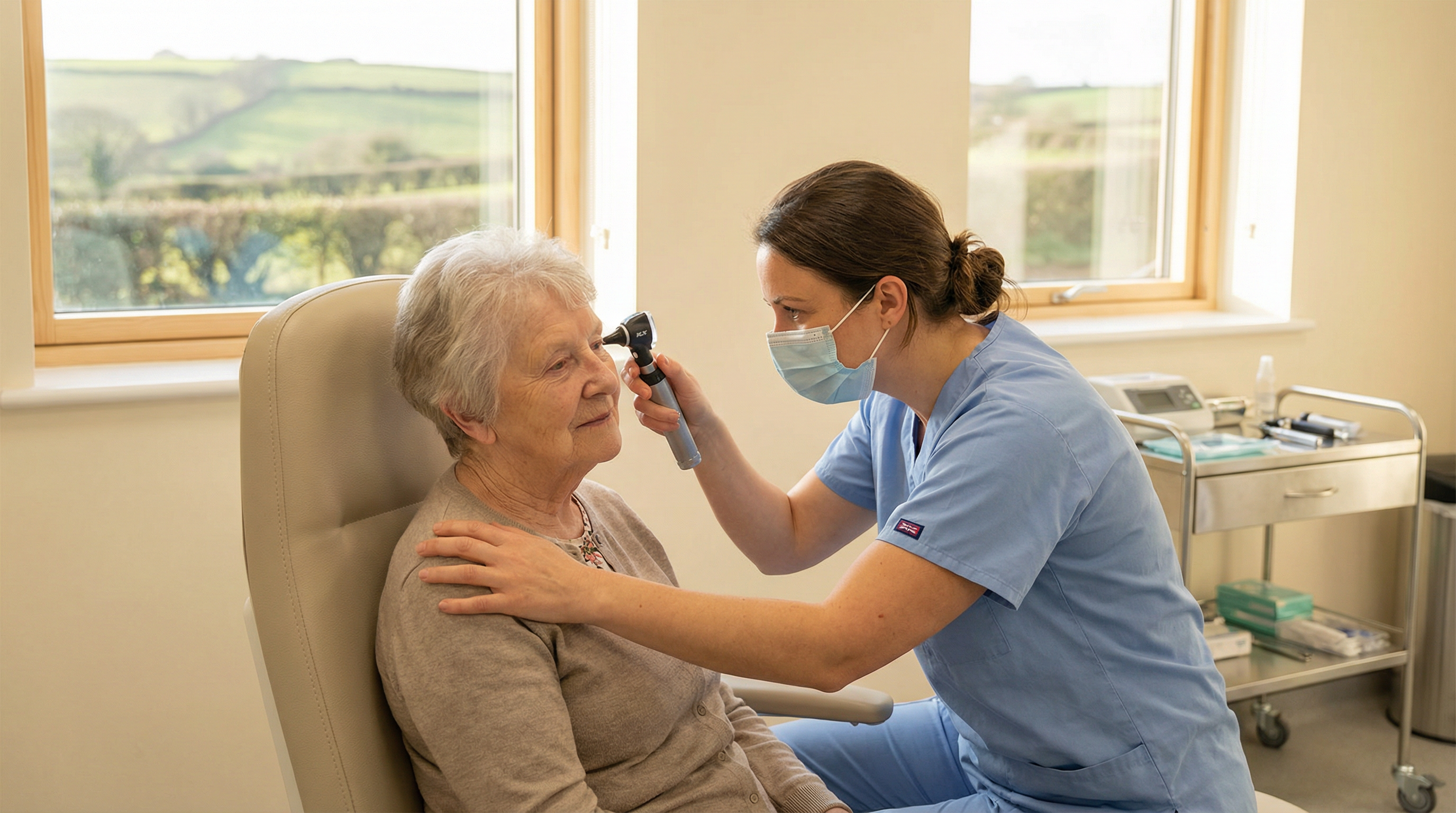
- Ear Examination: Using a special instrument called an otoscope, or often a video otoscope (which allows you to see inside your ear too!), Eleni will carefully examine your ear canal and eardrum. This helps her assess the amount and consistency of the earwax, and check for any underlying issues.
- Discussion of Removal Methods: Based on the examination, Eleni will discuss the most appropriate and safest earwax removal method for you. This could include:
- Microsuction: This is often considered the gold standard. It involves using a small, gentle suction device to carefully remove the earwax under direct vision with a microscope. It's precise, safe, and doesn't involve water.
- Ear Irrigation: This method uses a controlled flow of warm water to gently flush out the earwax. It's a modern, safer version of the old 'syringing' method, using electronic irrigators with regulated pressure.
- Manual Removal: Sometimes, if the wax is close to the entrance of the ear canal, small instruments can be used to carefully remove it.
- The Removal Process: Whichever method is chosen, Eleni will perform the procedure with utmost care and precision. You might hear some noises during microsuction, or feel a gentle sensation of water during irrigation, but it shouldn't be painful. If you experience any discomfort, you can let her know immediately.
- Post-Removal Check and Advice: Once the earwax is removed, Eleni will examine your ear again to ensure the canal is clear and the eardrum is healthy. She'll then provide you with personalised advice on how to keep your ears healthy and prevent future wax build-up. This might include recommendations for ear drops or tips on cleaning your ears safely.
NICE NG98 and QS185 Referral Criteria
It's important to understand that even within the NHS, there are guidelines for when earwax removal is indicated and when referral to specialist services might be necessary. NICE guideline NG98 [2] and Quality Standard QS185 [3] both highlight that earwax removal should be offered if it's contributing to hearing loss or other symptoms, or if it's preventing examination of the ear or taking ear canal impressions. While these guidelines encourage provision in primary or community care, the reality, as we've discussed, is that this often means seeking private specialist care.
Specifically, NICE guideline NG98 states that if ear irrigation is unsuccessful after a second attempt, referral to a specialist ear care service or an ear, nose and throat (ENT) service for earwax removal should be considered [2]. This underscores the importance of professional intervention when initial attempts are not successful.
Comparison: When to Seek Help for Your Ears
To make it even clearer, here’s a simple table to help you decide where to go for your ear concerns:
| Symptom/Situation | Best Place to Go | Why? -| | Sudden, severe hearing loss, severe pain, discharge, or dizziness | A&E or Urgent Care Centre | These are red flag symptoms that could indicate a serious medical condition requiring immediate attention. -| | Mild hearing loss, blocked ears, tinnitus, or itchiness | Private Specialist (e.g., Earwax Removal Devon) | These are common symptoms of earwax impaction. A private specialist can provide a prompt appointment for safe and effective removal using methods like microsuction or ear irrigation. -| | Unsure about your symptoms or have underlying health conditions | Your GP | Your GP can assess your overall health, rule out more serious conditions, and advise on the best course of action. They can refer you to a specialist if needed. -|
If you're still not sure what to do, it's always best to start with a call to your GP. They can help you navigate the healthcare system and ensure you get the right care for your needs.
Ready to Hear Clearly Again?
If you're struggling with blocked ears, hearing loss, or any of the other symptoms of earwax impaction, you don't have to put up with it. At Earwax Removal Devon, we're here to help you get back to feeling your best. Eleni is a highly trained and experienced ear care specialist who is passionate about providing safe, effective, and comfortable earwax removal.
Don't let earwax affect your quality of life any longer. Give us a call today on 01769 302119 or book your appointment online at earwaxremovaldevon.com. We look forward to helping you hear clearly again!
References
[1] National Institute for Health and Care Excellence (NICE). (2018). Hearing loss in adults: assessment and management (NICE Guideline NG98). Retrieved from https://www.nice.org.uk/guidance/ng98
[2] National Institute for Health and Care Excellence (NICE). (2018). Hearing loss in adults: assessment and management (NICE Guideline NG98). Retrieved from https://www.nice.org.uk/guidance/ng98
[3] National Institute for Health and Care Excellence (NICE). (2019). Hearing loss in adults (NICE Quality Standard QS185). Retrieved from https://www.nice.org.uk/guidance/qs185

