
In This Article
Can I clean earwax myself if I have a perforated eardrum?
A known or suspected perforation changes normal earwax self-care. Current NHS guidance advises people with a perforated eardrum not to put ear drops or objects into the ear unless a doctor recommends the specific treatment, and water-based self-irrigation should not be attempted. If wax is causing a problem, the ear should be professionally assessed so the eardrum status and an appropriate method or referral can be determined.[1] [2]
Urgent medical advice: After putting something into the ear, seek urgent help through an urgent GP appointment or NHS 111 if hearing changes suddenly, worsens over days or weeks, or hearing loss occurs with earache or discharge. Significant bleeding, severe or persistent pain, or significant dizziness after ear trauma also need medical advice rather than routine wax removal.[1] [3]
What is a perforated eardrum?
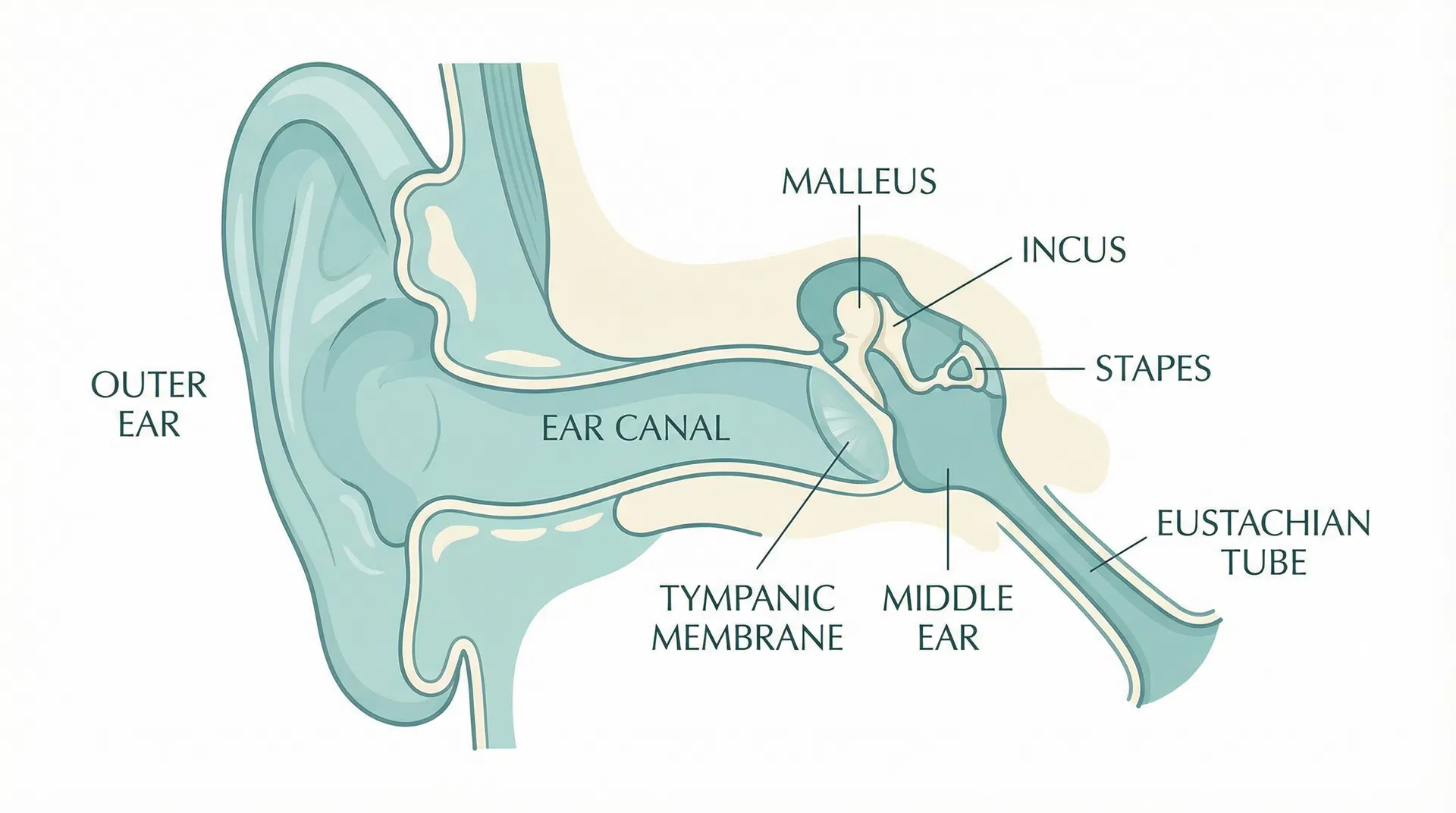
A perforated eardrum is a hole or tear in the tympanic membrane, the tissue that separates the ear canal from the middle ear. It can follow an ear infection, injury, loud noise or a sudden change in pressure. A cleaning injury is one possible cause, but it is not the only explanation for ear symptoms.[1]
Possible symptoms can include hearing change, earache, tinnitus, discharge, bleeding or dizziness. None of those symptoms alone proves that an eardrum is perforated; the same symptoms can occur with other ear conditions. Do not use pain from drops, a phone camera, a mirror or an attempted flush as a home test.
Known perforation, suspected injury and old ear history are different situations
If you have just injured your ear while cleaning it, the priority is to stop further self-treatment and use the appropriate medical route. If you were told about a perforation in the past, that does not establish whether it is still open now. Grommets and previous ear surgery are also different clinical contexts rather than interchangeable labels for a perforation.
An ear health assessment and otoscopy can establish what is present in the ear and whether a routine wax-removal decision is appropriate. This page cannot determine that from symptoms or photographs.
Why water and ear drops need extra caution
When the eardrum has an opening, fluid put into the canal may pass beyond the usual outer-ear boundary. This is why current NHS guidance says not to put eardrops into a perforated ear unless a doctor recommends them, and to keep the ear dry while it heals.[1]
Can I use ear drops, olive oil, peroxide or saline?
Not as a generic earwax self-care route if you know or suspect that the eardrum is perforated. The usual NHS earwax softening advice has a specific exception for a perforated eardrum: do not use drops.[2] That includes treating an oil, peroxide, saline or another product as a “natural” exception. If a clinician recommends a specific medicine for a known ear condition, follow that individual advice rather than a general online routine.
Can I flush, syringe or irrigate my ear?
Do not DIY irrigate or use a bulb syringe where perforation is known or suspected. This is not a situation for a lower-pressure technique, a different water temperature or repeated home attempts. The safe public route is to avoid self-irrigation and seek appropriate assessment.
Professional electronic irrigation is also not a consumer preference decision. Current NHS pathways treat current perforation, relevant discharge, grommets, surgery and other ear history as factors that can make water-based irrigation unsuitable or require a different pathway.[4] [5] This does not automatically make another procedure suitable.
Can I use cotton buds, ear picks or a camera tool?
No. NICE advises adults not to put small objects such as cotton buds into the ear canal to clean wax, because they can push wax further down and damage the canal or eardrum.[3] An ear pick or improvised object can also cause direct trauma. A consumer camera may show an image, but it cannot establish that the eardrum is intact, that what is visible is wax, or that manipulation is safe.
For the wider safety guidance on tools and camera devices, read cotton buds and DIY ear-cleaning risks. The important point here is that a known or possible perforation raises the threshold further: do not use a tool to clean around, investigate or test the eardrum.
What if my ear bleeds, hurts, feels dizzy or hearing changes after cleaning?
Bleeding after cleaning may come from the canal, the eardrum or another cause. Do not try to judge the location or severity by the amount of blood, and do not put tissue, cotton wool or drops into the canal. If you have sudden hearing loss, hearing that is worsening, or hearing loss with earache or discharge, use an urgent GP route or NHS 111. NHS guidance also lists dizziness, discharge and pain among possible symptoms of a perforated eardrum, but these symptoms are not diagnostic on their own.[1]
Sudden hearing loss should not be assumed to be “just wax” or “just a perforation”. NICE sets immediate or urgent referral pathways for adults with sudden or rapidly worsening hearing loss that is not explained by an external or middle-ear cause.[3]
Can professional earwax removal still be possible?
Sometimes wax removal may be considered, but a perforation or relevant ear history does not create a need for removal and does not select a method. Wax is removed only when it is clinically relevant and an appropriate route has been established. The fuller guide to who is suitable for earwax removal explains why current eardrum status, grommets, surgery, discharge and other history can change the decision.
Some NHS services use suction where water-based irrigation is unsuitable, including for selected people with perforation histories. That does not make it a universal answer. If assessment shows that removal is appropriate within the relevant service scope, microsuction earwax removal is one option that may be considered. It remains a procedure with recognised risks, and an assessment can also lead to another method, a pause or referral.[5] [6]
How should I protect a known perforation from water?
Current NHS guidance advises keeping the ear dry and not swimming until the eardrum heals. When washing hair, it suggests a large piece of cotton wool covered in petroleum jelly in the outer ear to help stop water getting in; do not push it into the canal.[1] This is water protection, not a way to clean wax or inspect the ear.
Do perforations heal?
The NHS says a perforated eardrum usually gets better on its own within about 2 months, although some people need further treatment and persistent cases may need specialist or surgical management.[1] That general information does not replace assessment after injury or override the urgent symptoms above.
Common questions
Can a cotton bud perforate an eardrum?
Direct trauma from a cotton bud or another inserted small object is a recognised risk. NICE does not say that every use causes injury; it says that inserting small objects can damage the ear canal and eardrum.[3]
Can a phone ear camera diagnose a perforation?
No. A consumer image does not establish the diagnosis, safe distance or safe next step. Professional examination considers the ear history and what is actually seen.
Is microsuction safe with a perforated eardrum?
Microsuction may be relevant in some assessed cases, especially where water is unsuitable, but relevance is not automatic suitability. The current eardrum, ear history, clinician expertise and service scope determine whether it is appropriate. Professional procedures still have recognised risks.[5] [6]
What if a perforation healed years ago?
An old perforation does not prove the eardrum is still open, but neither does it guarantee that every removal method is appropriate. Mention the history and use assessment to determine the next step.
Sources checked
[1] NHS: Perforated eardrum
[2] NHS: Earwax build-up
[3] NICE NG98: Hearing loss in adults
[4] NHS Tayside: Ear wax
[5] Guy’s and St Thomas’: Microsuction
[6] UCLH: Aural (Ear) Microsuction